
Public art collection
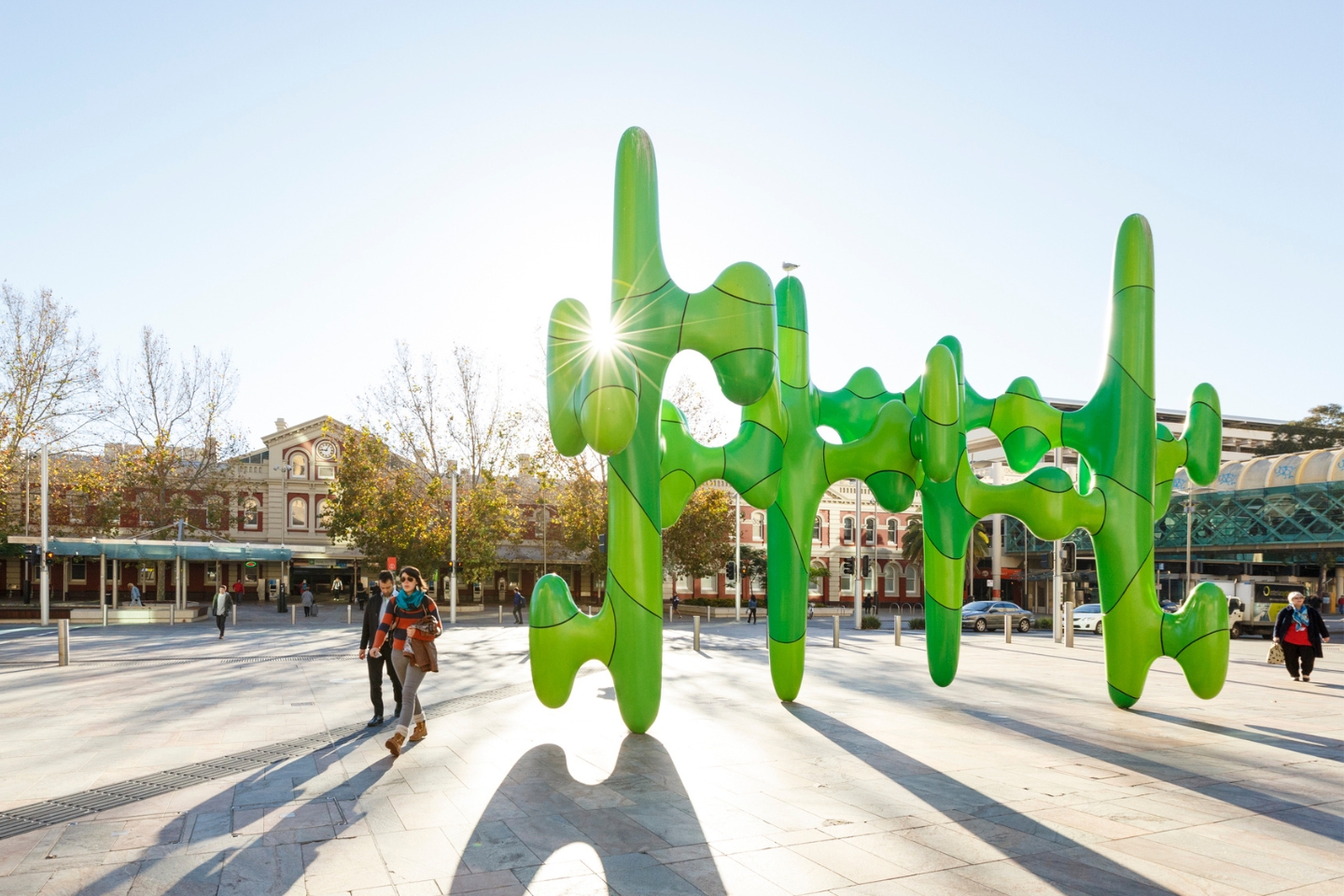
Discovering Perth through public art
Public Art helps shape and reflect the City of Perth’s unique identity, people and character. Artworks add colour and meaning to everyday spaces, creating new experiences for residents, visitors and tourists.
Throughout the City, you will find works in outdoor spaces, on and within buildings and peeking from laneways.
We care for a significant collection of more than 100 major contemporary and historic public art works located throughout the City’s precincts (West Perth, East Perth, Crawley-Nedlands, Northbridge and the CBD).
The collection celebrates Western Australia’s rich cultural heritage, while reflecting the evolving diversity of capital city life and respecting and acknowledging that all our works are situated on Whadjuk Nyoongar Boodjar.
New work
Work on a new Public Art Strategy is underway. The updated framework will guide the development, maintenance, sustainability, accessibility and interpretation of the City’s public art collection into the future.
The City will be engaging with a range of industry and public stakeholders to inform the development of a new Public Art Strategy that will guide the delivery of inspiring and engaging public art for the benefit of all Western Australians.
The City continues to commission public works of art and facilitate significant private art projects within the boundaries of the capital city, to stimulate thought, create a sense of place and deepen the experience of our spaces.
As part of the City’s commitment to urban renewal, laneway refreshes and the creation of new public spaces, new murals are also always appearing in Perth.
Take a self-guided tour of some of the major works across the city with our Art City Walking Trail, available as a download and on the Perth Trails App.
Caring for the public art collection
The City’s public art collection is supported by a maintenance program delivered by specialist providers. The program includes regular sightings and inspections to ensure works are safe and accessible, as well as maintenance, preventative conservation and specialist review and advice where necessary.
Public safety and the integrity of artworks is a priority.
Management of the City’s collection is guided by the Cultural Collections Policy (CP 4.7), Public Art Policy (CP 4.8) and Commemorative Works Policy (CP 4.9).
Frequently asked questions
-
What is public art?Public art includes artworks installed in public spaces that can take many different forms – from sculptures to murals, digital works, installations, illuminated works, memorials and even integrated architectural features.
-
Why does the City invest in public art?Public art helps create vibrant, engaging places. It celebrates local identity, supports cultural expression, contributes to civic pride, shares stories of people and places, attracts visitors and can enhance public safety and amenity.
-
Who decides where public art is located?Locations are carefully selected based on planning requirements, visibility, safety, and alignment to City plans and strategies. Decisions on locations usually involve a number of City staff, including curators, urban designers, planners and engineers. Sometimes community consultation will be undertaken as part of the assessment of a site’s suitability for an artwork. Location may also be decided by Council.
-
How are artists selected?Depending on the nature and scale of the project, artists may be selected through open calls, Expression of Interest processes (EOIs), invited submissions or direct commissions.
-
How is public art funded?Funding for public artworks may come from the City’s budget, developer contributions, grants, donations or partnerships.
Occasionally, the State or Federal government will transfer ownership of a work created as part of a project to the City of Perth to ensure it remains aligned to developments in the public realm and receives ongoing maintenance. -
What materials are used in public art?Materials vary widely and are usually determined by the environment, project scope, cultural protocols and the speciality of the artist. They may include metal, stone, ceramic, resins, polymers, paint, lighting, multimedia and more. Material selection will also depend on durability, maintenance needs, safety, sustainability and environmental requirements and the artist’s concept.
-
How are public artworks maintained?The City undertakes regular condition assessments, conservation work and cleaning based on the location, material, age and environmental exposure of each artwork. This work is carried out by specialist contractors.
-
What happens when an artwork needs repair or conservation?Qualified conservators assess the work required and carry out the appropriate treatment. Some works may be temporarily removed for conservation to ensure public safety and the long-term preservation of the artwork.
-
Can public art be moved or relocated?Yes. Artworks may be moved due to infrastructure upgrades, major works, safety concerns, conservation needs or site suitability. A thorough assessment is undertaken before any relocation to ensure the integrity of works can be maintained.
-
What happens if artwork is damaged or vandalised?Any damage to artworks is assessed by the City and, if needed, specialist experts such as structural engineers. Depending on the severity of the damage to an artwork, repairs may be carried out immediately or carried out in stages as part of scheduled conservation works.
-
How long does public art stay in place?Some artworks are designed for long term display, while others are temporary or commissioned for a specific period or event. The duration of an installation depends on the project’s intent, lifespan of the materials used and public safety. Some artworks, such as murals and graffiti art, are designed to be ephemeral or can benefit from constant change.
-
Why are some artworks permanently removed?
There are several reasons artworks may need to be removed from the public realm. The work may:
- pose a risk to public safety
- need significant conservation work
- need to be relocated to another site
- require temporary removal to protect it from particular developments or urban reconfiguration
- be nearing end of life due to the deterioration of its materials and its general condition.
The City makes it a priority to discuss any changes to an artwork’s condition or location with the artist, where possible, and engages specialist contractors to undertake removal works.
-
Does the City have any new public artworks planned?The City is currently working on a new Public Art Strategy. This document will guide the future of public art within the City and will focus on maintenance and sustainability as well as accessibility and interpretation.
Short and long term artworks will continue to appear, including new murals as part of laneway and public realm refreshes to Arts and Culture sponsorship opportunities that bring exciting new initiatives to Perth, and artwork handovers as part of larger State or Federal Government projects. -
Can the public suggest ideas or commission public art?Members of the public can contribute ideas for public artworks as part of City-led community consultation processes or through City programs.
If you would like to get involved in local art projects, consider working with artists and local organisations. -
Are there guidelines artists must follow?Yes. These usually include the curatorial intent or scope (detailing the creative intent and visitor experience relating to the work), safety requirements, engineering standards and relevant national codes, accessibility, heritage considerations and alignment with cultural protocols and City design principles.
Public artwork projects are always finalised with a formal Agreement between the artist and the City. -
What is temporary or pop-up public art?These are generally short-term installations that may include projections, performance-based works, ephemeral works or experimental pieces. They are often used to activate spaces for a specific event or purpose and can be used to test ideas and involve numerous artists without long-term commitment.
-
Will The Boonji Spaceman remain in Stirling Gardens or be moved?The Boonji Spaceman was unveiled in May 2025 and has proved to be overwhelmingly popular with visitors, tourists and families.
In October 2024, the Department of Planning, Lands and Heritage and the Heritage Council of Western Australia approved the artwork to be placed in Stirling Gardens for 12 months. This approval was required as Stirling Gardens is a local and State listed Heritage Place.
The City is currently investigating alternative locations within the CBD that are suitable for this artwork in terms of public safety, accessibility and viewer enjoyment.
Related documents
- Public Art Strategy1.85 MB | PDF Document
- Public Art Strategy Appendices271.2 KB | PDF Document
- Art City Walking Trail3.92 MB | PDF Document